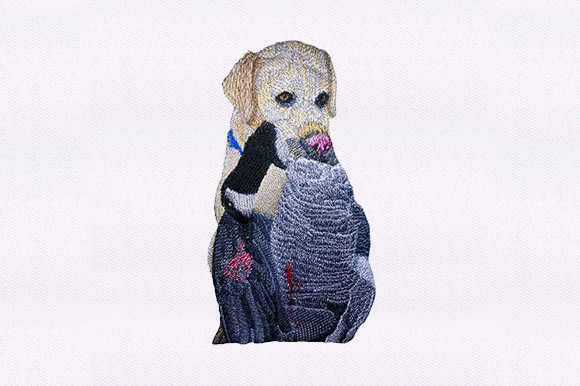
Labrador Retriever Embroidery Design Review for Business Use
As a professional embroidery designer working with small businesses and merchandise creators, I regularly evaluate digital embroidery files for their commercial potential. Today, I’m reviewing a design titled Labrador Retriever from the perspective of a brand looking to incorporate it into their physical products. The product description states it’s a high-quality machine embroidery design that will look great on fabric or clothes. Let's break down what that means for real-world business applications.
First Impressions: A Friendly and Classic Visual Personality
The Labrador Retriever design, by its very subject matter, carries an immediate emotional weight. It evokes feelings of loyalty, friendliness, and classic warmth. For a business, this isn’t merely a decorative element; it’s a potential brand ambassador. The design’s aesthetic likely leans towards a classic, perhaps slightly rustic or handmade feel, which can be incredibly effective for businesses wanting to project authenticity. Whether it leans more playful or elegant will depend on the specific art style within the file—something to scrutinize in the preview. This initial impression is crucial: does the design feel professional enough for a staff uniform, yet warm enough for a customer-facing tote bag? For pet brands, cafes, boutiques, or family-oriented studios, this balance is key.
Real-World Business Applications: Where This Design Shines
The description suggests versatility, and that’s the first box we need to check. For a small business, a single embroidery file that can work across multiple products is a cost-effective asset.
Embroidered Patches: A Labrador Retriever patch is a prime candidate for merchandise. It can be applied to denim jackets, backpacks, or hats as a standalone product for a pet store or animal rescue’s fundraiser. As a branded product add-on, a small patch sewn onto a tote bag or apron instantly creates a co-branded, premium feel.
Staff Uniforms and Workwear: This design could serve as a superb chest logo accent or sleeve detail on polo shirts for a dog-friendly bakery, florist, or community-focused café. On an apron, it transforms a functional garment into a branded statement that engages customers. For cap embroidery, the design needs to be tested for size, but it could offer a clean, recognizable mark for outdoor or active staff.
Product Packaging and Boutique Merchandise: Sewn onto a simple canvas bag, it elevates a basic product into handmade merchandise. For a craft business or Etsy seller, incorporating this into product labels or as an accent on tea towels, pillow covers, or blankets can significantly increase perceived value and visual consistency across a product line.
Practical Considerations and Potential Pitfalls
Versatility is promised, but execution is everything. Here are the critical points a business must evaluate before moving to production.
Scale and Detail: The most common issue with any design is performance at small sizes. For a small patch or cap front, intricate details can become muddled. High stitch density in small areas can lead to stiffness and fabric puckering. If the design has fine outlines or textured elements, testing at the intended final size—especially on curved surfaces like caps—is non-optional.
Fabric and Color Contrast: The design “will look great on any fabric” is a bold claim. Dark uniforms, textured fabrics like fleece or canvas, and lightweight materials all behave differently. Thread color contrast is vital for readability; a light-colored design on a dark shirt requires careful color choice and possibly underlay stitches. Always test on real fabric samples that match your final products.
Durability and Maintenance: Items like uniforms and tote bags need frequent washing. A design with very dense stitching or long stitch runs might be less durable over time. Using the proper stabilizer for the fabric type is essential to ensure the embroidery withstands commercial laundering or customer use.
Impact on Brand Identity and Customer Perception
Beyond the stitch, consider the brand story. Using a Labrador Retriever design isn’t neutral. It injects a specific personality into your brand identity. For a business, this can build tremendous customer trust and recognition if it aligns with your core values. It signals a friendly, approachable, and perhaps family-oriented brand. It can make a handmade product feel more personal and a uniform feel less corporate. However, consistency is key. If this design is an accent, it must work alongside your other design assets—your main logo, typography, and color palette—to create a cohesive visual system.
Essential Designer Notes Before Commercial Use
- Test in Black and White First: Convert the design to a single color (black) and stitch it out. This reveals the fundamental structure and readability without color distractions.
- Check Hoop Size Requirements: Confirm the physical dimensions of the design and ensure your embroidery hoop can accommodate it for your intended products.
- Create a Printable Mockup: Before production, generate a digital mockup of the design on a shirt, bag, or cap for client or internal approval. This visualizes the final product.
- Review Thread Colors: Plan your color palette. Does the design require many color changes, increasing production time? Can it be simplified for efficiency?
- Confirm Commercial Licensing: The product description does not specify license terms. You must verify that the digital embroidery file is licensed for commercial embroidery use before applying it to products for sale.
Final Verdict for Small Business Merchandise
The Labrador Retriever design holds significant potential for small business merch, custom apparel, and branded patches. Its subject matter is inherently engaging and can deepen a brand’s connection with its audience. Success, however, hinges on rigorous practical testing. Evaluate its performance at small sizes, on various fabrics, and within your specific production workflow. Treat it not just as a cute embroidery, but as a strategic design asset that will represent your business on every finished product it adorns. When executed well, it can elevate your product’s value, enhance your professionalism, and turn a simple garment into a memorable piece of branded storytelling.