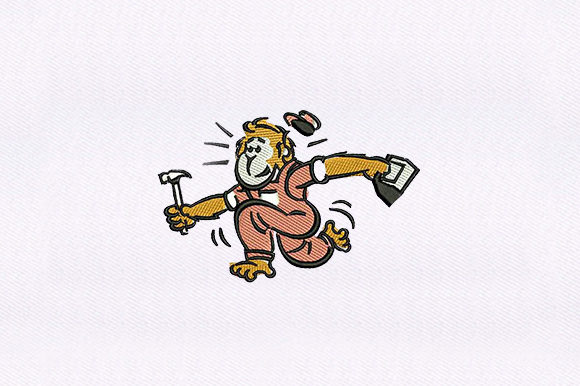
Monkey Worker Embroidery Design for Business Branding
When a client presents a new embroidery file for potential branding use, my first task is to evaluate its character and commercial viability. The Monkey Worker design, categorised under Baby Animals and Embroidery, immediately strikes a specific tone. From a professional embroidery designer’s perspective, reviewing this for small business merchandise isn’t about whether it’s “cute”—it’s about assessing whether it can carry a brand’s identity effectively across uniforms, patches, and products.
The Visual Personality: Friendly, Playful, and Approachable
The Monkey Worker title suggests a design that is inherently friendly and approachable. In the context of business use, this translates to a brand identity that is warm, relatable, and perhaps a touch whimsical. This is not a stern, corporate logo; it’s a character. For businesses like a family-run café, a creative studio, a boutique toy shop, a pet brand, or a local bakery, this personality can be a significant asset. It builds an immediate, emotional connection with customers, suggesting a business that values charm and personality over cold professionalism. The design’s described quality points towards a clean, well-digitised machine embroidery design, which is the foundation for any successful commercial embroidery project.
Real-World Applications for Small Business Merch
The true test of any embroidery file is how it performs on actual items. For the small business owner, craft business, or Etsy seller considering Monkey Worker, its applications are broad but require thoughtful placement.
Primary Branding Accents and Uniforms
As a chest logo on staff polo shirts or aprons, Monkey Worker would serve as a memorable, friendly identifier. On an apron for a café or bakery, it reinforces a handmade, personal touch. As a subtle sleeve detail on a work shirt, it adds brand consistency without overwhelming the garment. For businesses with a more rustic or handmade presentation, this design aligns perfectly with that aesthetic, potentially increasing perceived product value and customer trust.
Embroidered Patches and Custom Apparel
The embroidered patch application is particularly strong for Monkey Worker. A well-made patch featuring this design can be applied to tote bags, denim jackets, or backpacks as boutique merchandise or customer gifts. It can also be used as a product packaging accent—sewn onto a reusable bag that accompanies a purchase. For event merch or as a standalone product on a craft business’s Etsy store, a Monkey Worker patch has immediate appeal. It’s a tangible, wearable piece of brand recognition.
Cap Embroidery and Tote Bag Design
On the curved surface of a cap front, the design’s success depends on its digitisation density and outline clarity. Similarly, as a central mark on a canvas tote bag design, it becomes a walking advertisement for a florist, bookstore, or creative studio. These applications turn everyday items into branded assets that engage buyers and promote visual consistency.
Critical Considerations for Professional Execution
While the personality is promising, practical execution dictates the final outcome. Here are the key points an embroidery shop or apparel decorator must evaluate before production.
Testing for Scale and Detail Integrity
First, always test the digital embroidery file in black and white on a sample fabric. This reveals the core structure without color distracting you. Crucially, check if it works at a small patch size. Many charming designs lose definition when minimized for a cap or a small product label. Inspect the spacing of elements and any potential tiny lettering if included; these can become muddy at high stitch density on textured fabric. Confirm the minimum viable hoop size for clean results—information that should be provided with the file.
Context and Contrast on Final Products
Review thread color contrast carefully. On dark uniforms or bags, the design may need a bold, light backing color or altered thread choices to remain prominent. Always test on real fabric—the same fabric you’ll use for the final product—using proper stabilizer. A design that looks great on plain cotton may behave differently on a sweater or a canvas tote. Fabric texture is a major factor.
Brand Integration and Client Presentation
Before committing, create a printable mockup for client approval. Place the Monkey Worker design alongside other brand assets on a simulated shirt or bag. Does it complement the overall brand identity? Does it feel cohesive? Comparing it beside other design assets ensures it enhances, rather than clashes with, your business’s visual language. This step is vital for maintaining professionalism and buyer engagement.
Where to Exercise Caution
Some applications require extra care. Using Monkey Worker on items that need frequent washing, like staff uniforms, demands a robust digitisation that won’t degrade quickly. Extremely small patch sizes might compromise the character’s recognisable details. On very curved surfaces or fabrics with a pronounced texture, the design’s outlines could distort. For these scenarios, a simplified version or a strategic placement might be necessary. Always advise clients on these limitations to ensure a quality finished product that upholds customer trust.
The Final Step: Licensing and Commercial Readiness
My most important note for any small business owner, merch creator, or product designer: confirm commercial licensing before business use. The description mentions it is a machine embroidery design, but the license terms for producing items for sale are a separate, critical detail. Never assume. Ensure the file is purchased with or explicitly grants the right for commercial embroidery on the merchandise you plan to create. This protects your business and respects the designer’s work.
In conclusion, the Monkey Worker embroidery design presents a significant opportunity for businesses built on warmth, creativity, and a personal touch. Its friendly, playful character can elevate branded merchandise, from staff aprons to customer tote bags. However, its commercial success hinges entirely on professional testing for scale, contrast, and fabric compatibility, followed by careful integration into your broader brand identity. With due diligence, it can become a cherished, recognisable asset for your handmade shop, local boutique, or creative brand.